What do residents expect from local government use of AI?
A new report from ai@cam, the University of Cambridge's flagship AI mission, provides unique insights from a public dialogue run by HVM, on the public’s views of AI in local government.
Local councils are facing sustained resource pressures, and making effective use of available capacity has never been more important. Dialogue participants highlight the critical need for improvements to public services, and are cautiously optimistic about the potential for AI to save time and money which could free up council staff to serve the public better.
But as AI becomes embedded in our public institutions, residents are clear that it must be applied to the right problems, in the right way. Efficiency is not an end in itself. AI should be introduced selectively, where it can bring tangible improvements to people’s lives, without exacerbating existing social and environmental problems.
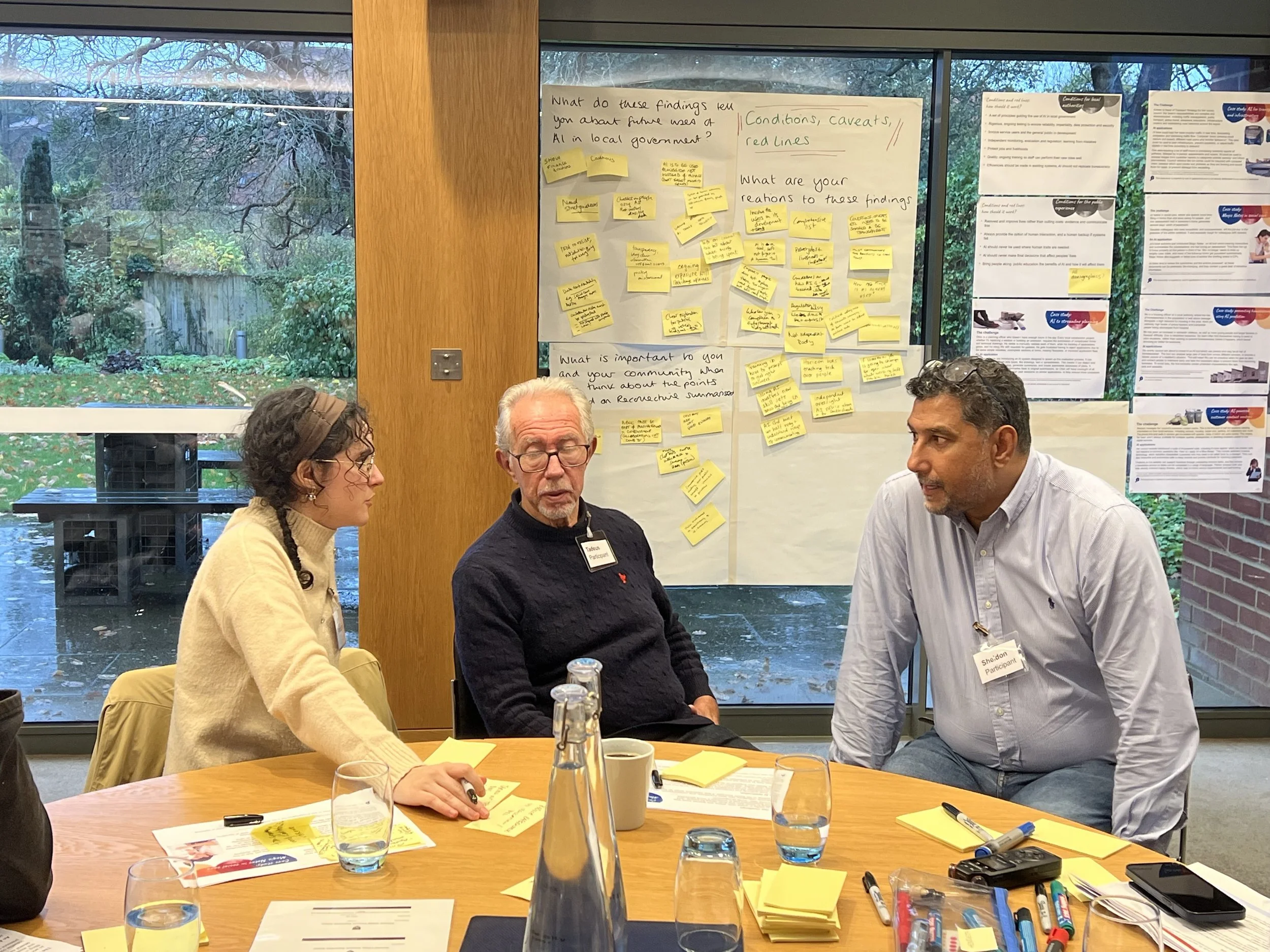
Participants called for AI in local government to:
Address genuine public needs and improve people’s experience of services
Complement human expertise, with any benefits reinvested in the workforce
Be designed and deployed in accessible and inclusive ways
Be developed locally, using AI applications with small environmental footprints
Contribute new ways to improving and joining up underlying systems
ai@cam commissioned HVM to design and deliver this public dialogue, which ran from November 2025 to May 2026. It has been a real pleasure working closely with ai@cam throughout this process.
The dialogue began with 95 Cambridgeshire residents exploring, in an online space, how AI might be used across council services, from social care to planning to preventing homelessness.
29 of these participants then met in person to develop a set of principles for what good AI in local government should look like. Those principles shaped the selection criteria for ai@cam's AI for Local Government Accelerator, which went on to fund a set of 6 collaborative projects pairing Cambridge researchers with local councils, to tackle challenges including social housing, planning and fly-tipping.
26 of the original residents came together in person for a second phase, to discuss these 6 live projects directly with the people building them. Their questions and recommendations fed straight back into each project's design. We are grateful to the project leads involved for explaining and discussing their projects with clarity and openness.
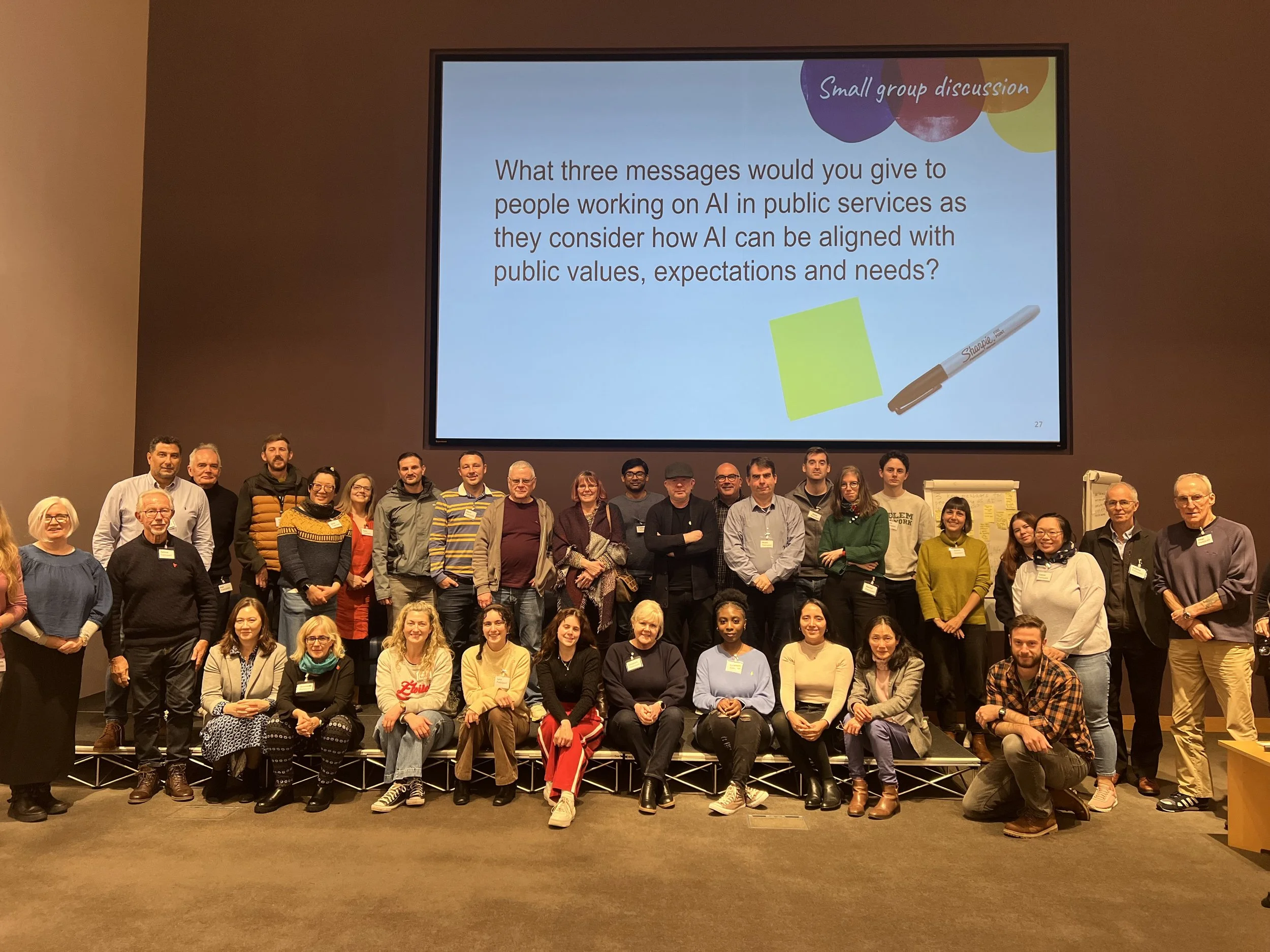
The dialogue findings report, written by HVM, shows how public attitudes to AI in local government are evolving, and what this means for those developing it. It provides practical recommendations for project design, and suggestions on how to think differently about how AI is introduced. The report paints a clear picture of what good looks like from the public’s point of view, providing an ethical governance framework for AI in local government, developed by participants.
The HVM team has really enjoyed working with all the brilliant participants in this public dialogue, and we thank them for their thoughtful, honest and astute contributions. They have clearly shown that residents are willing and able partners in shaping how AI and public services evolve, and that residents’ voices are essential to developing and deploying AI in local government in a way that genuinely serves the public interest.